
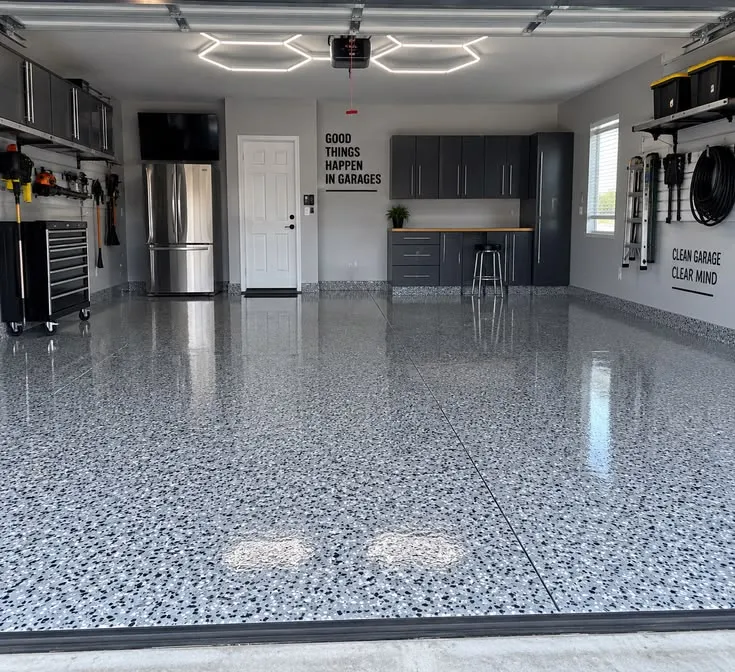
Moving into a newly constructed home is exciting, especially when the garage has never been used for parking or storage. The clean concrete may appear ready for a decorative finish, but a new slab is not automatically suitable for immediate coating. Homeowners exploring garage flooring should understand how concrete curing, moisture conditions, construction schedules, and surface preparation influence installation. Making these decisions before moving equipment into the garage can simplify the project. It also helps prevent unnecessary work after the household has already settled into its new property.
Understand That New Concrete Needs Assessment
Fresh concrete continues to undergo physical and chemical changes after placement. Although it may support certain construction activities relatively early, coating suitability depends on its moisture condition, surface quality, and the chosen product’s requirements.
Homeowners should not assume a fixed waiting period applies to every slab. Concrete composition, curing methods, weather, and vapor movement can affect readiness. An installer should evaluate the surface and follow the coating manufacturer’s instructions before beginning work.
Check for Construction Residue
A newly built garage may contain drywall dust, paint overspray, adhesive residue, or curing compounds left during construction. These materials can interfere with coating adhesion even when the concrete appears clean.
Mechanical grinding is often used to prepare the slab and create an appropriate surface profile. Contractors should explain how contamination will be removed and whether previous sealers or curing products require additional attention.
Coordinate the Flooring With Moving Day
Installing a coating before filling the garage with belongings can make preparation easier. Vehicles, bicycles, shelving, and storage containers otherwise need temporary locations while the work is completed.
A practical schedule should address:
-
Completion of remaining construction activities.
-
Concrete inspection and moisture assessment.
-
Mechanical surface preparation and repairs.
-
Coating application and required curing.
-
Return of vehicles and heavy storage equipment.
Allow sufficient flexibility if the installer discovers conditions that require further treatment before coating.
Compare Decorative Systems Carefully
An epoxy garage floor may include a resin base, decorative flakes, and protective topcoats. Different systems offer different appearances, curing characteristics, and exposure limits.
Dialed In Epoxy describes mechanical grinding, crack repairs, decorative color layers, and UV-stable polyaspartic topcoats in its installation process. Homeowners should discuss which components are proposed for their particular slab rather than assuming every quoted system is identical.
Think About Future Garage Activities
A new garage may initially serve only as a parking area. Later, the household might add cabinets, exercise equipment, bicycles, or a hobby workstation.
These possibilities deserve consideration before selecting a finish. Heavy equipment, rolling wheels, and automotive chemicals can affect flooring differently. A design suitable for occasional parking may require additional protective measures when other activities become regular.
Choose a Finish for the Entire Space
New construction provides an opportunity to coordinate flooring with wall colors, lighting, and storage cabinets. Decorative flake blends can introduce subtle patterns, while solid colors offer a simpler appearance.
Lighter finishes may make an enclosed garage feel brighter, although maintenance and traction remain important. Ask for samples viewed under actual garage lighting. Strong reflections and unusual color combinations may look different once vehicles and shelving are installed.
Clarify Installation and Warranty Details
Before approving the work, request a written description of preparation, materials, coating layers, and return-to-service restrictions. Confirm whether crack treatment and unexpected substrate problems are included.
Some warranties contain exclusions relating to moisture, structural movement, or improper maintenance. Understanding those details before installation can prevent confusion later. Preserve product records and invoices for future reference.
Maintain the Finish After Moving In
A new coating can simplify routine cleaning, but it still requires sensible care. Construction debris, gravel, and small stones should be removed before they scratch the protective surface.
Use compatible cleaning products and avoid dragging heavy furniture across the floor. Periodically inspect entrances and high-use areas for damage. A simple maintenance routine can help preserve the finished appearance as household activities increase.
Conclusion
Coating a newly constructed garage requires more planning than selecting a decorative color. Concrete readiness, construction residue, substrate preparation, and the household’s moving schedule all influence installation. Homeowners should compare material specifications and understand curing restrictions before returning vehicles or heavy equipment. For residents planning garage floor improvements in Phoenix and surrounding Arizona communities, dialedinepoxy.com provides information about epoxy and polyaspartic coating systems. Completing the project at the appropriate stage can help create an organized, attractive garage while avoiding unnecessary disruption after moving into a new home.