
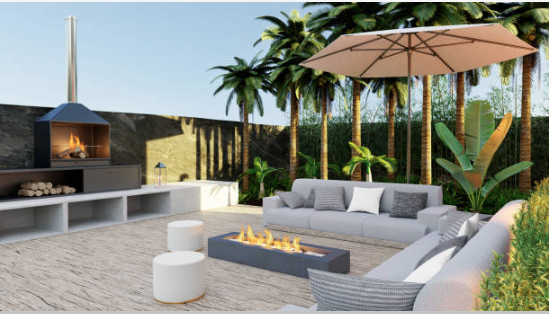
Outdoor fireplaces allow New York homeowners to enjoy their outdoor spaces well beyond summer. When planning an installation, one of the biggest decisions is choosing between a gas or wood-burning outdoor fireplace. Each option offers unique benefits, and the right choice depends on lifestyle, maintenance preferences, and local regulations.
Wood-Burning Outdoor Fireplaces
Wood-burning fireplaces deliver a classic, authentic experience with crackling flames and natural aromas. Many homeowners appreciate the rustic ambiance and traditional feel they provide. Wood-burning units also do not rely on gas lines or electricity, making them usable during power outages.
However, wood-burning fireplaces require more maintenance. Ash cleanup, wood storage, and chimney cleaning are ongoing responsibilities. In New York, local codes and air-quality regulations may also restrict wood-burning use in certain areas. During harsh winters, moisture and snow can impact firewood quality if not properly stored.
Gas Outdoor Fireplaces
Gas fireplaces are known for their convenience and reliability. With the flip of a switch, homeowners can enjoy consistent heat without the hassle of lighting or cleaning. Gas units produce minimal smoke, making them ideal for residential neighborhoods and compliant with many New York municipal regulations.
Gas fireplaces perform well in cold weather, providing steady heat output even during freezing temperatures. While they require professional installation and access to a gas line, they offer low maintenance and cleaner operation, which appeals to many busy homeowners.
Cold Climate Performance
New York’s winters can be long and severe. Gas fireplaces tend to function more consistently in cold climates since they aren’t affected by damp firewood or snow accumulation. Wood-burning fireplaces can still perform well, but require careful maintenance to prevent moisture-related issues and structural wear.
Cost and Long-Term Considerations
Wood-burning fireplaces typically have lower upfront costs, but long-term expenses can add up due to wood purchasing, maintenance, and cleaning. Gas fireplaces have higher initial installation costs, but lower ongoing maintenance and operating effort.
Final Thought
For New York homes, gas fireplaces offer unmatched convenience, cleaner operation, and reliable cold-weather performance. Wood-burning fireplaces provide traditional charm and independence from utilities but require more upkeep. The best choice depends on how often you plan to use your fireplace and how much maintenance you’re willing to manage.
This post was written by a professional at Sunrise Proscapes. Based in West Seneca, NY, Sunrise Proscapes provides complete hardscaping services including patios, walkways, retaining walls, outdoor kitchens, granite countertops, and seasonal landscaping. Known for excellence in hardscaping in Williamsville, NY, we serve West Seneca, Buffalo, Orchard Park, East Aurora, Hamburg, and neighboring Western New York communities. Our skilled team delivers expert advice and dependable installations, making us a trusted provider of hardscaping solutions near you with a focus on quality, value, and long-term results.
doxycycline monohydrate
doxycycline monohydrate
finasteride proscar
finasteride proscar
doxycycline hyclate
doxycycline hyclate
fluconazole for dogs
fluconazole for dogs
sertraline hcl 50 mg tablet
sertraline hcl 50 mg tablet
fluconazole tablet
fluconazole tablet
esomeprazole 40mg
esomeprazole 40mg
cialis turkiye fiyati
cialis turkiye fiyati
udenafil fda approval
udenafil fda approval
tadalafil pill identifier
tadalafil pill identifier
topical minoxidil female
topical minoxidil female
minoxidil support answers
minoxidil support answers
sildenafil endothelial effects
sildenafil endothelial effects
Comments are closed.